How do we build confidence in ocean energy technologies and accelerate their journey towards commercial deployment? Testing at different stages of technological development is an essential part of the answer.
During ICOE OEE 2026 in The Hague, partners from the Offshore Proof project took the opportunity to present their work, sharing insights into testing infrastructure, technology development and the importance of providing the right conditions for ocean energy technologies to progress towards deployment.
From onshore laboratories to offshore testing facilities
Ewout of POM west Vlaanderen presented the journey of wave energy converter (WEC) testing in Oostende, illustrating how technologies can be tested and validated across different Technology Readiness Levels (TRLs).
The journey begins with onshore laboratory testing at COB, where technologies can undergo controlled testing and initial validation. It then moves to the Blue Accelerator Tower, an operational nearshore testing facility that offers opportunities to test devices in a more representative marine environment.
Looking further ahead, Ewout also introduced new investments planned for two testing zones further offshore. These developments will expand testing opportunities, allowing technologies to progress towards more demanding offshore conditions and higher levels of technological readiness.
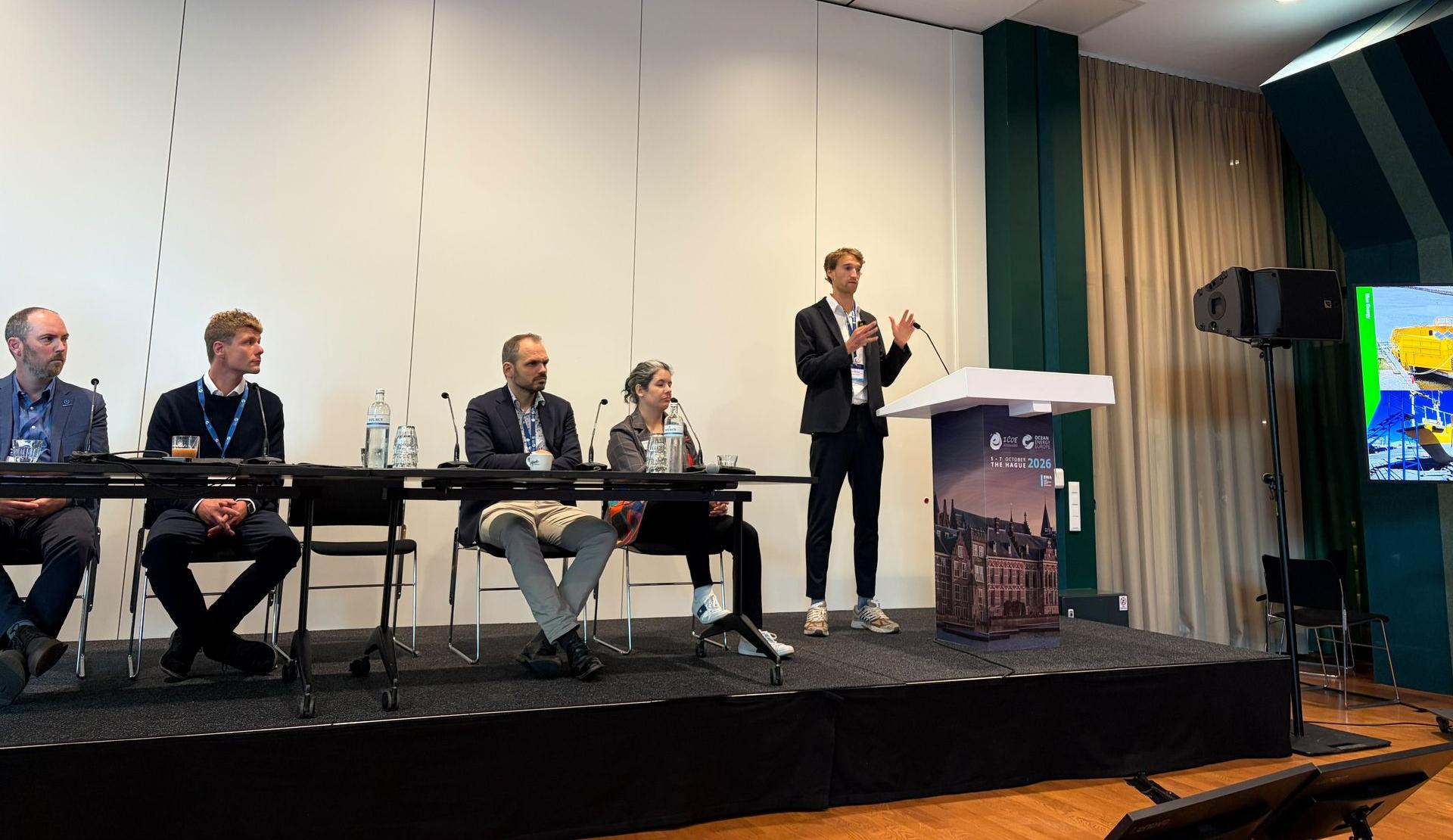
[Efrain's presentation – to be completed]
[Add details about Efrain's presentation]
Building the skills for testing and certification
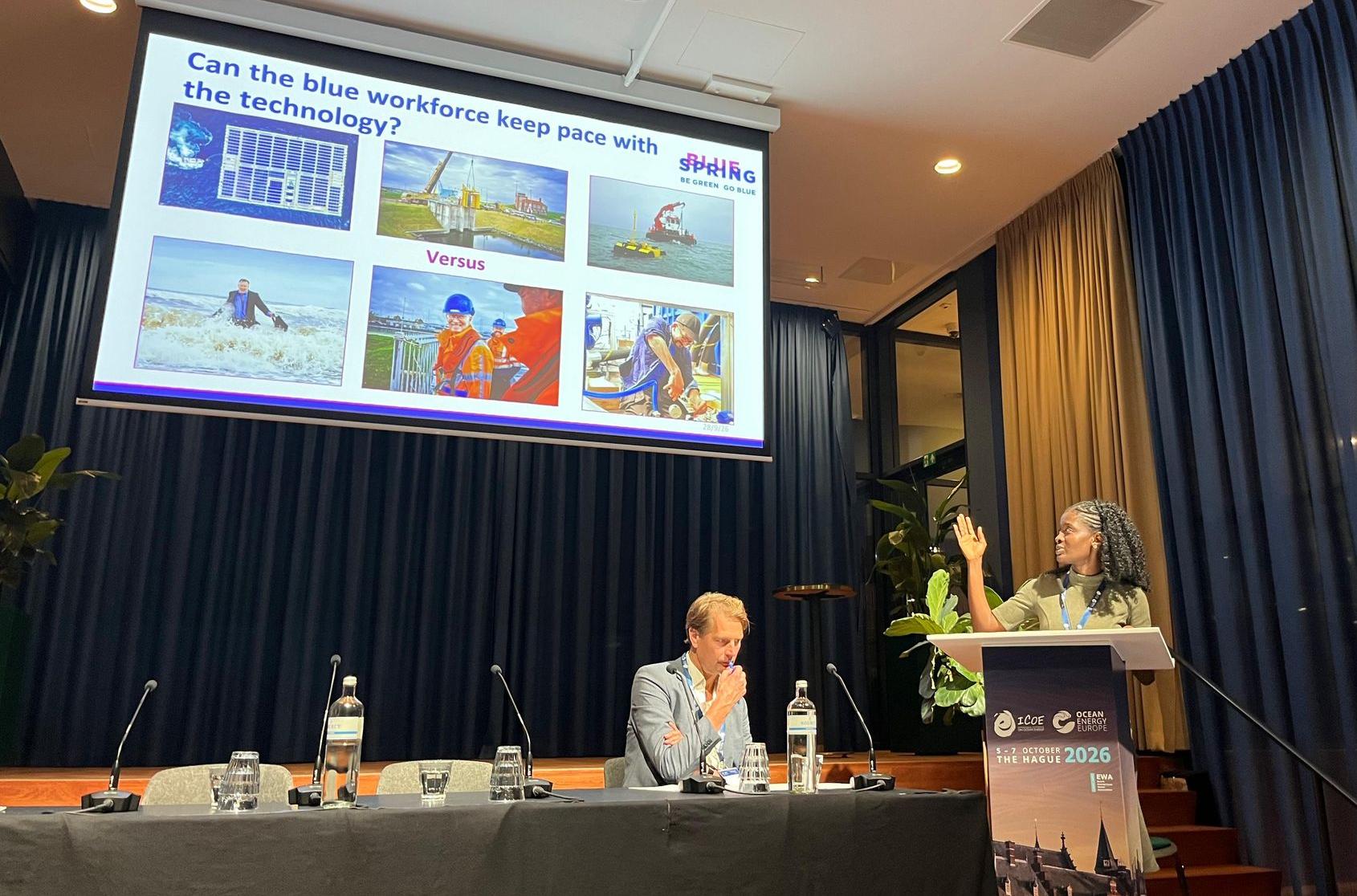
Representing Deftiq, Lina Laar contributed to the session on Measuring the Socio-Economic Impacts of Ocean Energy, highlighting the skills and expertise needed to support the development, testing and certification of ocean energy technologies.
As technologies progress towards commercial deployment, the sector needs a workforce equipped to design, test, validate and certify them. This requires investment in education and training, stronger collaboration between industry and educational institutions, and opportunities to transfer existing skills from other sectors into ocean energy.
Her presentation also highlighted the importance of building a connected workforce ecosystem, ensuring that the right expertise is available to support reliable testing, certification and the wider growth of the ocean energy industry.About Offshore Proof
Strengthening collaboration between European test sites
Peter Scheijgrond, representing Campus@Sea, also presented the Offshore Proof project, highlighting its mission to strengthen collaboration between test sites across North-West Europe and improve access to testing and demonstration facilities for offshore renewable energy technologies.
By building a stronger, more connected testing network and supporting knowledge exchange, the project aims to help technology developers validate their innovations, overcome technical barriers and accelerate the path towards commercialisation.
The presentation also explored how testing, international standards and certification work together to build confidence in emerging technologies. Testing provides evidence of how a device performs under relevant conditions, while standards and certification offer recognised frameworks for assessing its reliability and performance. Together, they can help reduce uncertainty for developers, investors and insurers. Read more

In conclusion
The presentations at ICOE OEE 2026 highlighted how infrastructure, testing and certification, and skills development are interconnected in advancing offshore renewable energy. Accessible testing facilities enable technologies to progress through different stages of development. Robust testing procedures, international standards and certification help build confidence in their performance. And behind every test, assessment and technological breakthrough are people with the knowledge and expertise to make it possible.
Through Offshore Proof, partners across North-West Europe are working to bring these elements closer together: connecting test sites, strengthening knowledge exchange, improving access to testing facilities and supporting the expertise needed to advance the sector.